

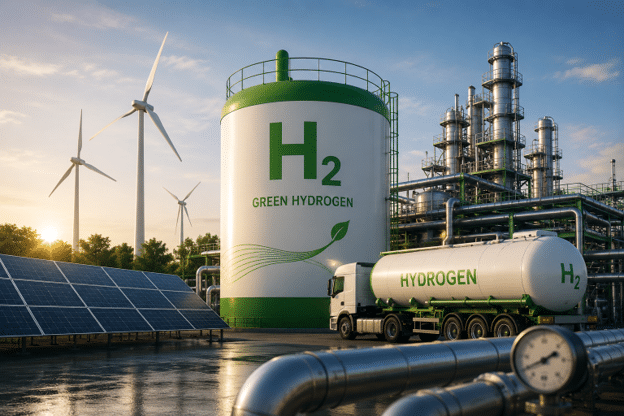
We have hit a wall with standard electrification. Slapping solar panels on residential roofs and building sprawling wind farms works wonders for keeping office lights on or charging passenger cars. But that barely scratches the surface of our heaviest industrial polluters. This glaring gap is exactly why clean energy companies in India are shifting away from basic renewables and toward the real heavyweight contender: green hydrogen.
The Chemistry is Simple; The Execution is Brutal
The core mechanics of green hydrogen sound elegantly simple on paper yet they remain notoriously brutal to execute at scale. By feeding clean, renewable electricity into an electrolyser, we split ordinary water into its base components: oxygen and hydrogen. When you burn that hydrogen or run it through a fuel cell, the only byproduct left behind is water vapour. No carbon footprint. No hidden caveats.
But we need to be honest about the current landscape. Historically, hydrogen has been anything but green. Nearly all the hydrogen pumping through modern oil refineries and fertiliser plants is ‘grey’ — chemically ripped apart from natural gas via steam methane reforming. It’s a dirty process that spits out massive quantities of carbon dioxide. For green hydrogen companies in India, transitioning to clean energy isn’t a matter of just tweaking an industrial recipe; it’s a total foundational overhaul.
The Scaling Bottleneck: Costs and Slippery Logistics
Right now, the green hydrogen sector is stumbling out of its cautious pilot phase and wrestling with the harsh economics of gigawatt-scale production. The primary hurdle isn’t the underlying technology — it’s the stubborn cost gap. Green hydrogen still carries a massive price premium over its dirty, fossil-fueled counterparts. Bridging this gap demands a steep drop in electrolyser manufacturing costs, alongside a relentless, uninterrupted supply of ultra-cheap renewable energy. Then there is the logistical nightmare of moving it. Hydrogen is notoriously slippery. Because its molecules are so minutely small, they easily escape through standard pipelines, meaning we need specialised high-pressure storage or chemical conversion into green ammonia just to transport it reliably.
Moving Past the Hype: Global Momentum Gets Real
Despite these massive growing pains, the momentum for green hydrogen is building globally. Governments worldwide are finally moving past vague press releases and putting hard capital on the line. Massive infrastructure players across Europe and major port hubs in Australia are starting to treat hydrogen as a serious logistics commodity rather than just a basic project.1
Decarbonising Sectors using Grey Hydrogen
Forget the hype about domestic heating or long-haul trucking for a second — the immediate wins won’t be there. The lowest-hanging fruit for green energy companies in India lies in decarbonising sectors that already use grey hydrogen as a core feedstock, like refineries and chemical plants. If we can swap grey for green in fertiliser production alone, we wipe out a massive slice of global emissions without even touching the transportation sector. Only after securing those victories, the roads will open up for green steel and synthetic aviation fuels.
Final Thoughts
Scaling this revolution won’t happen overnight and it definitely won’t be a smooth, linear ride. Instead, it’s going to be a messy, coordinated scramble between state subsidies, private capital and brute-force engineering breakthroughs. But as grid connections mature and electrolyser gigafactories spin up, green hydrogen is cementing its place. It isn’t a luxury option reserved for a distant future anymore — it is the missing piece required to finish the heavy-lifting job that wind and solar started.
References:
- Australia-Germany Hydrogen and Energy Forum, Sept 6, 2026 (Upcoming)
| Disclaimer: The information provided in this blog is for general informational purposes only and not professional advice. Jakson Green Limited bears no responsibility for errors, omissions or the accuracy of the information provided. |

