

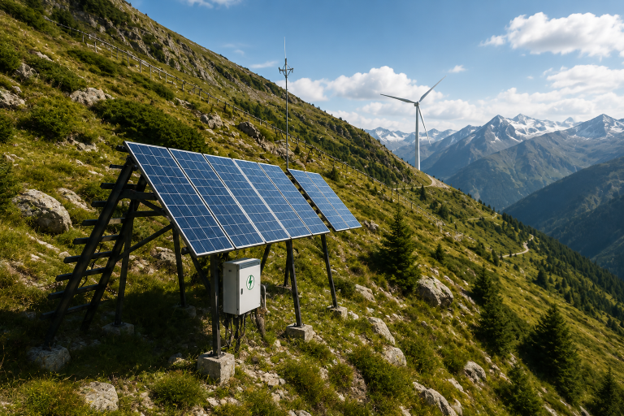
The remote corners of our world — from isolated island communities to high-altitude mountain villages — share a common, exhausting struggle: energy insecurity. For decades, the default fix has been the diesel generator. It’s a loud, fossil-based and financially draining band-aid, especially when fuel has to be flown in or trucked over treacherous roads.
Solar Photovoltaic (PV) technology offers a massive lifeline here. But deploying solar in the middle of nowhere isn’t as simple as slapping a few panels on a roof and walking away. Off-grid solar deployment is a brutal test of logistics, environment, and community trust. When you don’t have the luxury of a stable main grid to fall back on, success boils down to a few non-negotiables. Here are some of the best practices suggested by top renewable energy companies in India to get the most out of your investment.
1. Design for the Real World (Not the Lab)
Oversizing a system wastes precious capital; undersizing it leads to system blackouts and a swift loss of community trust. Engineers often design systems based on perfect, theoretical weather data. In remote regions, you have to design for the worst-case scenario. This means accounting for extended monsoon seasons, heavy dust accumulation or extreme sub-zero temperatures that degrade battery capacity.
- Load Profiling: Don’t just guess how much power a village needs. Look at peak hours, seasonal shifts and future growth. The moment a village gets reliable power, people buy refrigerators and appliances. Your design must anticipate that surge.
- Energy Storage Synergy: Solar panels are only half the battle. In off-grid setups, the battery bank is the actual heartbeat. While lithium iron phosphate (LFP) batteries have a higher upfront cost, their depth of discharge and lifespan make them vastly superior to old-school lead-acid batteries in harsh, unmonitored environments.
2. Radical Simplification and Ruggedisation
If a component breaks in a major city, a technician fixes it by tomorrow afternoon. If it breaks in an off-grid community, that system might stay dead for six months.
- Standardise the Gear: Use modular, plug-and-play components. If an inverter fails, a local operator should be able to slide a new module in without needing a Master’s degree in electrical engineering.
- Environmental Defence: Dust, moisture and pests are the ultimate system killers. Use enclosures with high IP (ingress protection) ratings. Keep bugs out of the electronics and ensure structures can withstand local wind loads without warping over time.
3. Cultivate Local Ownership
The absolute biggest mistake by some of the solar energy companies in India is the ‘drop and dash’ approach — installing a shiny new solar array and leaving. Before a single panel is unboxed, build a local governance model. Train community members — specifically emphasising the inclusion of local women and youth — to handle basic operations, monthly cleaning and minor troubleshooting. Establish a transparent tariff or fee structure for the electricity. This creates a dedicated maintenance fund, ensuring that when a component inevitably needs replacing in five years, the cash is already sitting in a local bank account.
The Bottom Line
Off-grid solar isn’t just a technical challenge; it’s a human one. The technology is ready. Our deployment strategies just need to match its resilience. By matching rugged, realistically sized hardware with a deeply rooted community business model, green energy companies in India can permanently replace traditional fossil-based generators with clean and reliable power.
| Disclaimer: The information provided in this blog is for general informational purposes only and not professional advice. Jakson Green Limited bears no responsibility for errors, omissions or the accuracy of the information provided. |

