Picture a coastal village. You’re looking out at an ocean that goes on forever but you can’t get a single glass of clean water to save your life. To make things worse, the closest power grid stops miles out. For tons of people living on isolated islands or dry coastlines, this isn’t some rare emergency, it’s just a regular day.
For years, the go-to fix was dragging-in big, noisy diesel desalination units. They get the salt out, for sure, but they require a lot of investment and constant shipments of fuel. Most importantly, they spit out thick carbon smoke. But things are shifting. By hooking water desalination technology straight up to green or clean power, green energy companies in India are finally cutting ties with fossil fuels and main power lines. This overlap of desalination and decarbonisation is changing how off-grid communities stay afloat.
The Real Hassle of Off-Grid Living
Remote towns usually get hit twice. They don’t have reliable electricity and their wells are drying up or getting ruined by ocean water sneaking inland as sea levels climb. Standard desalination takes a massive amount of power to force water through tight filters. Running these rigs on diesel means you’re totally dependent on fuel trucks or supply boats. If a storm hits and delays the drop-off, the water stops flowing. Plus, burning fuel to create fresh water is a losing game for clean energy companies in India. You end up feeding the exact climate mess that caused the water shortage to begin with.
How Solar Desalination Actually Gets It Done
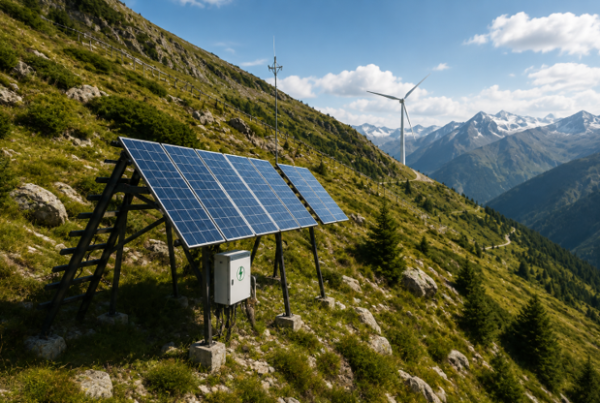
Modern solar rigs skip the grid by keeping the set-up local. Usually, they pull this off in one of the two ways:
- Solar PV Reverse Osmosis (RO): Solar panels make electricity to run high-pressure pumps. These pumps shove salty water through heavy-duty membranes, catching the salt and letting clean water pass through.
- Direct Heat Distillation: Great for small, far-flung spots, it uses the sun’s raw heat to vapourise the water, leaving dirt and salt behind, then catch the clean steam as it cools back down — no electricity needed.
The real trick isn’t the high-tech parts, though. It’s how solar desalination companies in India manage the system. Instead of buying huge, pricey battery banks to keep the machines running all night, they use the water as the battery. They run the pumps at full speed while the sun is blaring, filling up big tanks up on a hill. When it gets dark, gravity handles the distribution, sending water down to the houses.
Conclusion
Dumping diesel for solar isn’t just a win for the environment, it’s about standing on your own feet. Fixing the world’s fresh-water-crisis doesn’t mean running copper wires across the globe, sometimes you just need to catch the sun. When a town makes its own water using the sunlight hitting their roofs, the whole economy shifts. And because these modular solar units can start small and grow when the town grows, they don’t force communities into massive debt like old-school water plants do.
| Disclaimer: The information provided in this blog is for general informational purposes only and not professional advice. Jakson Green Limited bears no responsibility for errors, omissions or the accuracy of the information provided. |