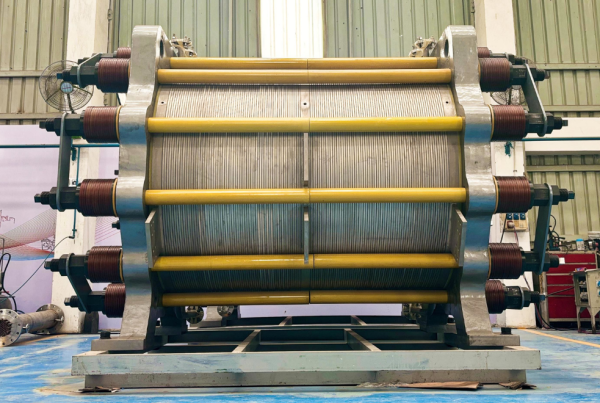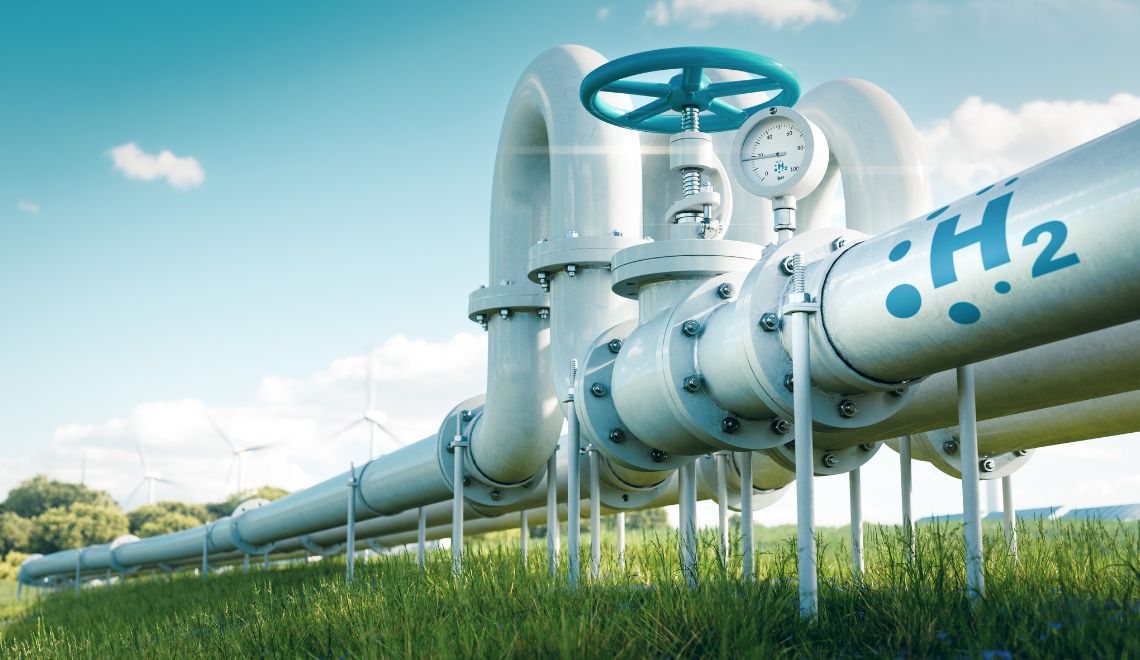
In 2023, India launched the National Green Hydrogen Mission (NGHM), setting an ambitious target of producing 5 million metric tonnes of green hydrogen annually by 20301. Clearly, the country wants to reduce greenhouse gas emissions and produce a lot of green hydrogen. However, distribution is still a major challenge. The solution? To mix green hydrogen with natural gas in the existing pipelines. It is a practical and cost-effective approach for decarbonisation while green hydrogen companies in India develop better and sustainable solutions for a fully green system.
Why Green Hydrogen Blending Works
Green hydrogen, which is produced without releasing any carbon emissions, can be mixed with methane, which is the main component of natural gas. When this mixture is burned, it does not release carbon because hydrogen only produces water vapour.
India has a big network of natural gas pipelines that covers over 20,000 km, serving cities, towns and factories all over the country2. Blending hydrogen with natural gas is a good idea because it does not require replacing the entire system. Homes, schools, hospitals and factories can continue to use their existing gas stoves, boilers and engines without any problems.
Blending Hydrogen with Natural Gas: Practical Benefits
Cleaning energy companies in India are also looking at the practical benefits of blending hydrogen with natural gas. One of the benefits is that hydrogen disperses quickly if it leaks, which makes it safer than other gases in some ways. Consumers do not notice any difference when using a mixture of green hydrogen and natural gas – especially when the concentrations are low. The real benefit will come when this is done on a scale as it will lead to lower bills for households and industries as well as reduced dependence on imported gas.
Green Hydrogen with Natural Gas: Is the Mix Safe?
Studies suggest that a small amount of hydrogen can be added to the natural gas network without causing any problems. A PNGRB report has found that it is safe to mix up to 2% of hydrogen with natural gas across the entire network with only minor adjustments needed. It might also be possible to mix up to 5-10% of hydrogen with natural gas in most pipelines, however, some pipelines may need to be checked for valves, compressors and metres3.
Challenges We Need to Overcome
It is estimated that using existing pipelines for blending hydrogen with natural gas will be much cheaper than building new pipelines. However, there are still some challenges for renewable energy companies in India to overcome. Higher concentrations of hydrogen will require some upgrades to the pipelines and monitoring systems. It will require the right policies, a lot of investment and collaboration between the government and renewable energy companies to make things affordable.
Conclusion
India’s journey to net zero emissions has already begun and it is an exciting time. Blending hydrogen with natural gas is a smart and inclusive way for India to reduce its carbon emissions. It not only uses the existing infrastructure but protects jobs in the energy sector and paves the way for a greener future.
References:
- Ministry of New and Renewable Energy (MNRE) – ‘Steps by Government to promote renewable energy in the country’. Published on Feb 9, 2023
- Economic Times EnergyWorld – ‘India expands natural gas grid pipeline to over 25,000 kms, and working on another 10,459 kms’. Published on Dec 26, 2025
- PNGRB – ‘Pathways for Transmission of Hydrogen in Natural Gas Pipelines and City Gas Distribution Network’. Published on June 19, 2025
| Disclaimer: The information provided in this blog is for general informational purposes only and not professional advice. Jakson Green Limited bears no responsibility for errors, omissions or the accuracy of the information provided. |