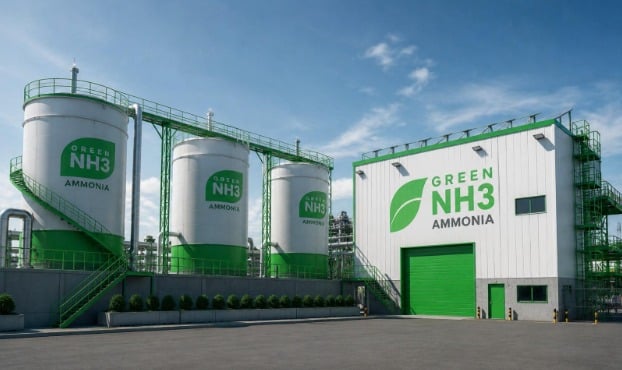
Clean energy companies in India are working day-in and day-out to build massive, ultra-clean electrolysers to save the planet. But, if you talk to the engineers actually trying to clean up the heavy industry, they will tell you that green hydrogen isn’t the immediate saviour. Green ammonia (NH3) is the real workhorse. The reason? It packs tightly, liquefies without a massive fight and can piggyback on infrastructure we already own.
The Nightmare isn’t Production; It’s Movement
Take a look at the global map. From the blinding salt flats of Chile to the deep Australian outback to the deserts of Rajasthan, all the perfect spots for gigawatt-scale solar grids and wind farms are thousands of miles away from the industrial complexes that desperately need the fuel. Green energy companies in India are staring down a multi-layered logistical blockade defined by critical steel shortages and a complete lack of transport assets.
Limited Shipping Capacity
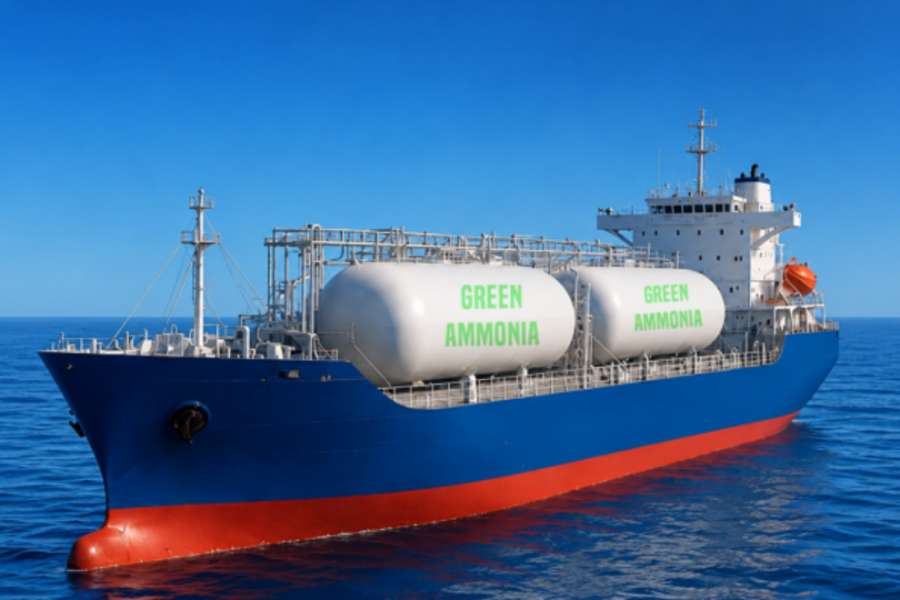
We already ship grey ammonia globally for the fertiliser trade. But the sheer volume needed to power global shipping or steel mills is a completely different challenge. Liquid ammonia demands a constant, bone-chilling temperature of -33.3°C if it sits at normal atmospheric pressure. Otherwise, it needs heavy, high-pressure tanks.
To scale this up, renewable energy companies in India would need massive, specialised refrigerated storage terminals and thousands of ISO containers. Our current deep-water berths cannot handle the massive, next-generation ocean carriers required for this trade.
Frankly, the global fleet of these specialised gas vessels is tiny. You cannot run a global energy transition when your shipping capacity is functionally bottlenecked by a shortage of steel hulls.
The Paperwork Trap: Providing the Evidence of Origin
Then, there is the invisible problem: proving the molecule is actually clean. If an industrial buyer pays a massive premium for green fuel to escape the EU’s heavy Carbon Border Adjustment Mechanism (CBAM) tax, they need bulletproof, unforgeable evidence of origin. This creates a brutal administrative nightmare for logistics firms. Every single handoff from pipeline compression to a rail car transfer must be tracked continuously. If a single transport link uses dirty energy or a green batch gets contaminated with standard, fossil-derived grey ammonia in a shared tank, its clean premium vanishes instantly. The financial value of the entire shipment drops to zero.
Bureaucracy & Brutal Realities
Safety rules also make everything slower. Ammonia is notoriously toxic and carries a sharp, terrifyingly suffocating odour. Green energy companies in India know how to manage it safely at sea but pushing huge volumes through local rail networks, public highways and suburban ports can trigger massive pushback from local regulators. Local communities do not want high-pressure toxic gas lines running through their backyards, leading to endless court battles and expensive rerouting. Permitting timelines are incredibly slow.
Is There a Solution?
Yes, to fix the structural gaps, renewable energy companies in India are abandoning old logistical models. Many are moving toward full vertical integration – placing the production plants directly on deep-water docks to remove inland transit completely. For the remaining land routes, green ammonia companies are deploying blockchain ledger systems to lock down carbon tracking automatically at every checkpoint.
Conclusion
Production price drops mean nothing if the fuel stays stuck at the dock. The winners of this energy transition will be those green energy companies in India that will be able to master the gritty, unglamorous work of moving freezing, hazardous liquids across the globe.
| Disclaimer: The information provided in this blog is for general informational purposes only and not professional advice. Jakson Green Limited bears no responsibility for errors, omissions or the accuracy of the information provided. |