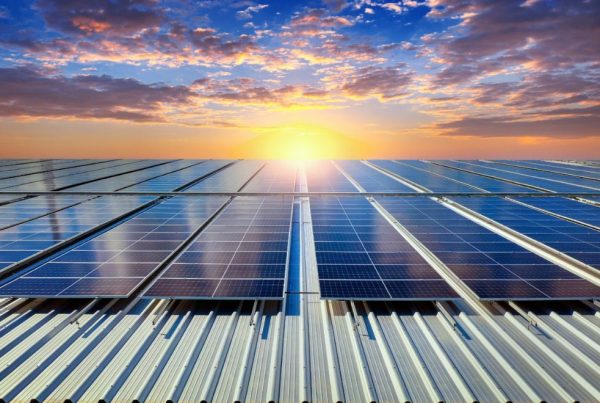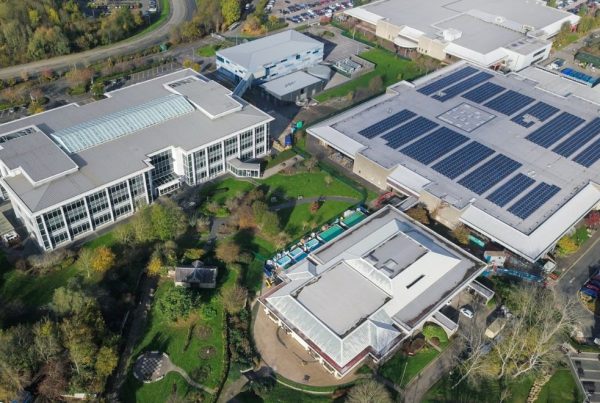
Operations & maintenance (O&M) form the very heartbeat of long-term solar asset performance. Engineering, procurement, and construction determine how a plant is built, but operations & maintenance determines how well a plant performs over its 25-30 year operational life. At its core, effective O&M depends on three fundamentals: rapid fault detection and resolution, minimising downtime caused by system failures, and accurate actionable reporting that enables informed operational decisions.
As the solar fleet worldwide grows, the O&M sector has developed into a standalone yet more complex market segment in its own right. The industry now recognises that commissioning a plant is only the beginning. Even intrinsically reliable solar PV systems degrade over time owing to dust build-up, weather conditions, component failure, and grid variability. Against this backdrop, artificial intelligence is emerging as a defining force, particularly in the domain of predictive maintenance.
Why Predictive Maintenance Matters
It is obvious that O&M costs are a critical determinant of commercial success in renewable energy, with direct impacts on metrics such as the LCOE. Most faults detected early tend to be inexpensive and quick to resolve. Once a fault has had the time to progress, however, repair costs can increase exponentially, stretching downtime into weeks or months.
Generally, this problem is very clearly demonstrated by offshore wind; however, the rule is that it is equally applicable to large-scale solar: a delayed inverter failure, a deteriorating string, or a continuous hotspot can result in the loss of generation, thus, the rapid ageing of equipment and the loss of money that could have been avoided. Predictive maintenance is an attempt to stop this chain effect by recognising the different kinds of situations well before they become actual failures.
How AI is changing solar O&M
AI-powered predictive maintenance needs constant streams of data from sensors, inverters, SCADA systems, drones, and thermal imaging. Machine learning models then look at parameters like temperature, voltage, current, irradiance, and historical performance trends to establish a baseline of “normal” behaviour.
Once a baseline has been established, AI systems are then able to tell when there are anomalies which could indicate that the equipment is starting to degrade, even if it is only slightly. So, operators no longer have to wait for the situation to escalate and the alarm to go off after a failure, they can take the intervention action by cleaning panels, changing components, or even if needed, adjusting the maintenance schedule for the most convenient times. Unplanned downtime is, therefore, reduced, asset life is extended, and total operation & maintenance costs are lowered as a result of the chain of events that follow.
Predictive maintenance also allows for smarter resource allocation. Maintenance teams can deploy according to risk and impact, rather than a fixed schedule, and it ensures attention is focused on where it delivers the highest operational value.
Beyond purely AI-based solutions
Despite this promise, however, AI is not a silver bullet. Fully AI-driven solutions are based on large-scale, high-quality, labelled datasets. Collecting such data takes time, while for some failure modes-such as catastrophic component failures-it may hardly exist at all. AI models thus struggle to generalise, while the experienced human inspector often uses intuition and caution borne of years in the field.
Another limitation is that of scope: Many of the current AI solutions are capable of detecting only a limited number of fault types, whereas real-world solar plants exhibit a wide range of failure modes that must be assessed during normal operation.
The result is that the industry is moving towards an AI-supported model of inspection rather than a fully automated one. In this model, it is not a case of trying to supplant human expertise with AI; rather, AI extends human capabilities.
Human expertise, augmented by AI
There are also traditional challenges with solely human inspection. Diagnostic accuracy is highly dependent on individual expertise, and consistency among a team of inspectors is difficult to maintain. Fatigue, subjectivity, and pressure to keep up with the production line can greatly impact the results.
AI-assisted systems address these issues by providing decision support. Machine vision tools can pre-screen the many images generated from drones or thermal cameras, flagging those areas of concern for closer human review.
Predictive models can prioritise the assets based on failure probability and potential revenue impact. This melding together improves consistency, reduces oversight risk, and frees inspectors to dwell on those complex or ambiguous cases that require invaluable human judgment.
The strategic advantage of AI-driven predictive maintenance is no longer a futuristic concept but increasingly a competitive imperative. By reducing downtime, lowering O&M costs, and enhancing performance predictability, it has a direct impact on improving asset profitability. At a system level, this contributes to grid stability by ensuring solar generation remains predictable and reliable as penetration increases. As AI and automation continue to mature, the solar companies that integrate predictive maintenance into their O&M strategies now are positioned for efficient scaling, risk management, and long-term value delivery from their assets. The next frontier in solar O&M is not about replacing people with machines but essentially about making smarter decisions much earlier, quicker, and with way greater confidence.